Mitochondrial Apoptosis Pathway Diagram
Explore a mitochondrial apoptosis pathway diagram showing BCL-2 family control, BAX/BAK, cytochrome c, apoptosome assembly, and caspase activation.
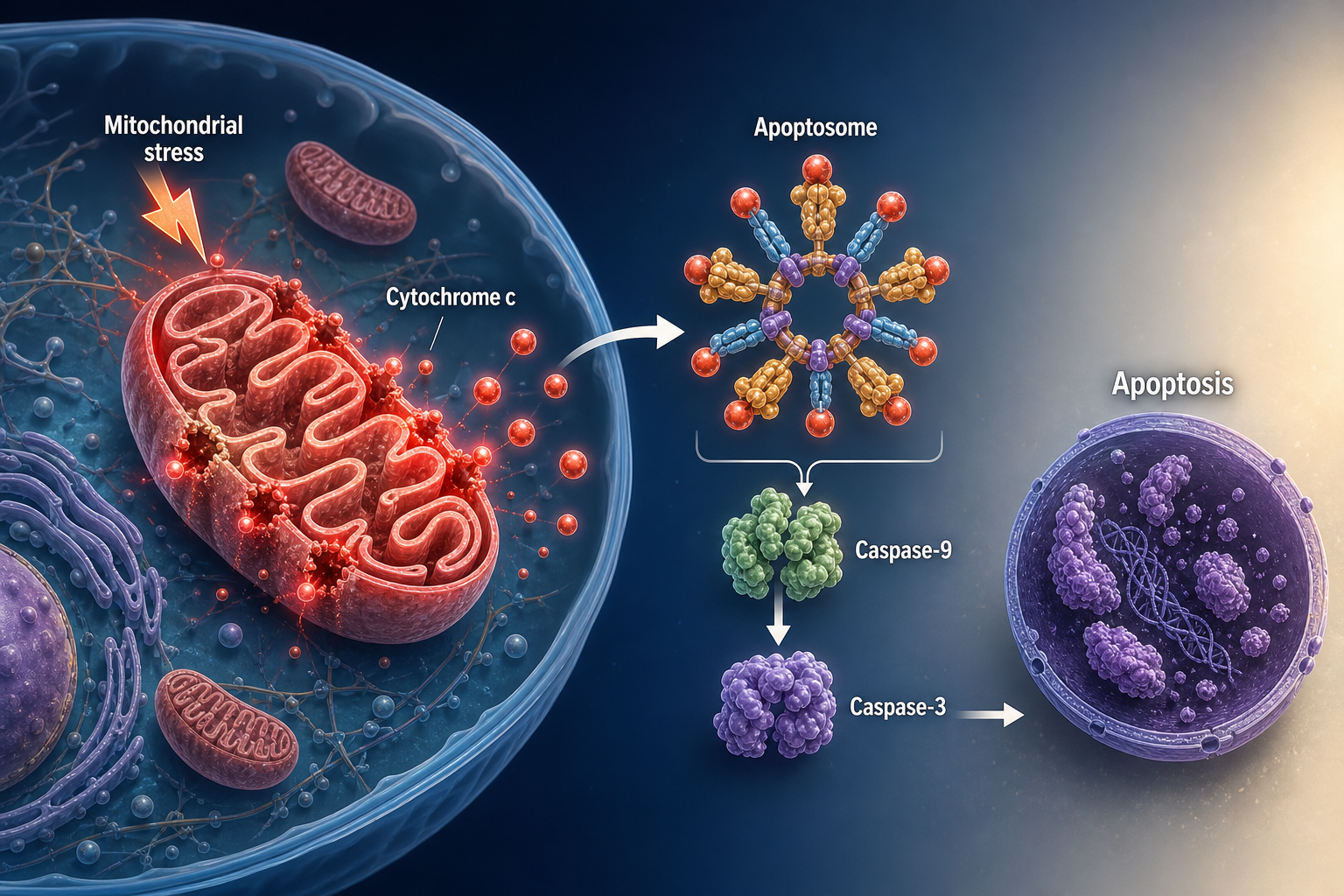
What this mechanism diagram shows
The intrinsic apoptosis pathway integrates intracellular stress through BCL-2 family proteins. When pro-apoptotic signaling overcomes BCL-2-like protection, BAX and BAK drive mitochondrial outer membrane permeabilization, cytochrome c supports apoptosome assembly, and initiator and executioner caspases produce controlled cell dismantling.
- 1Intracellular stress activates BH3-only pro-apoptotic signals.
- 2BCL-2 family balance shifts toward BAX/BAK activation.
- 3BAX/BAK cause mitochondrial outer membrane permeabilization and cytochrome c release.
- 4Cytochrome c and Apaf-1 assemble the apoptosome and activate caspase-9.
- 5Caspase-9 activates executioner caspases that dismantle the cell.
Core intrinsic apoptosis mechanism
Begin with a defined stress such as DNA damage, growth-factor withdrawal, or ER stress. Show BH3-only proteins shifting the balance between anti-apoptotic BCL-2 proteins and the BAX/BAK pore-forming effectors.
Mitochondrial outer membrane permeabilization is the commitment point in the central figure. Connect released cytochrome c to Apaf-1 and procaspase-9, then to executioner caspases.
Regulation and experimental variants
Add p53, specific BH3-only proteins, IAPs, or Smac only when they are part of the experiment. Distinguish mitochondrial apoptosis from death-receptor signaling, even if both converge on executioner caspases.
If showing a therapeutic intervention, place BH3 mimetics or other compounds beside their supported target and avoid implying that caspase activation is the only possible cell-death endpoint.
Generate a custom apoptosis figure
Specify the stressor, cell type, regulator, intervention, and assay endpoint. Review mitochondrial localization, activation order, and distinctions between correlation and causal pathway steps.
Scientific sources and content method
Sources checkedThis mechanism text was prepared with an AI-assisted editorial workflow and checked against the peer-reviewed sources below. It is for research communication and education, not medical advice; verify it against your study context before publication.
Last source check:
- Mitochondria as multifaceted regulators of cell death
Nature Reviews Molecular Cell Biology (2020) · DOI: 10.1038/s41580-019-0173-8
Reusable prompt
Paste this into MechFig, then replace the ingredient, pathway, or target tissue with your own research context.
Mitochondria-centered apoptosis pathway, protein complex icons, red accents for pro-apoptotic steps, journal illustration style. Scientific content: Stress → Bax/Bak oligomerization → MOMP → cytochrome c release → apoptosome (Apaf-1) → Caspase-9 → Caspase-3 → execution. Bcl-2 family can inhibit.
Embed this mechanism diagram
Copy the HTML below to include descriptive image text and attribution back to this example page. Confirm that your use complies with applicable rights and site terms before publication or commercial use.
FAQ
What triggers the mitochondrial apoptosis pathway?
Triggers include DNA damage, severe cellular stress, growth-factor withdrawal, and other signals that activate BH3-only proteins and overcome anti-apoptotic BCL-2 family control.
What is the role of cytochrome c in apoptosis?
After mitochondrial outer membrane permeabilization, released cytochrome c binds Apaf-1 and supports apoptosome assembly and caspase-9 activation.
How is intrinsic apoptosis different from extrinsic apoptosis?
Intrinsic apoptosis centers on mitochondrial permeabilization; extrinsic apoptosis begins at death receptors. The pathways can interact and both may activate executioner caspases.