CRISPR-Cas9 Diagram
Explore a CRISPR-Cas9 diagram showing guide RNA loading, PAM recognition, target-DNA pairing, double-strand cleavage, and NHEJ or HDR repair outcomes.
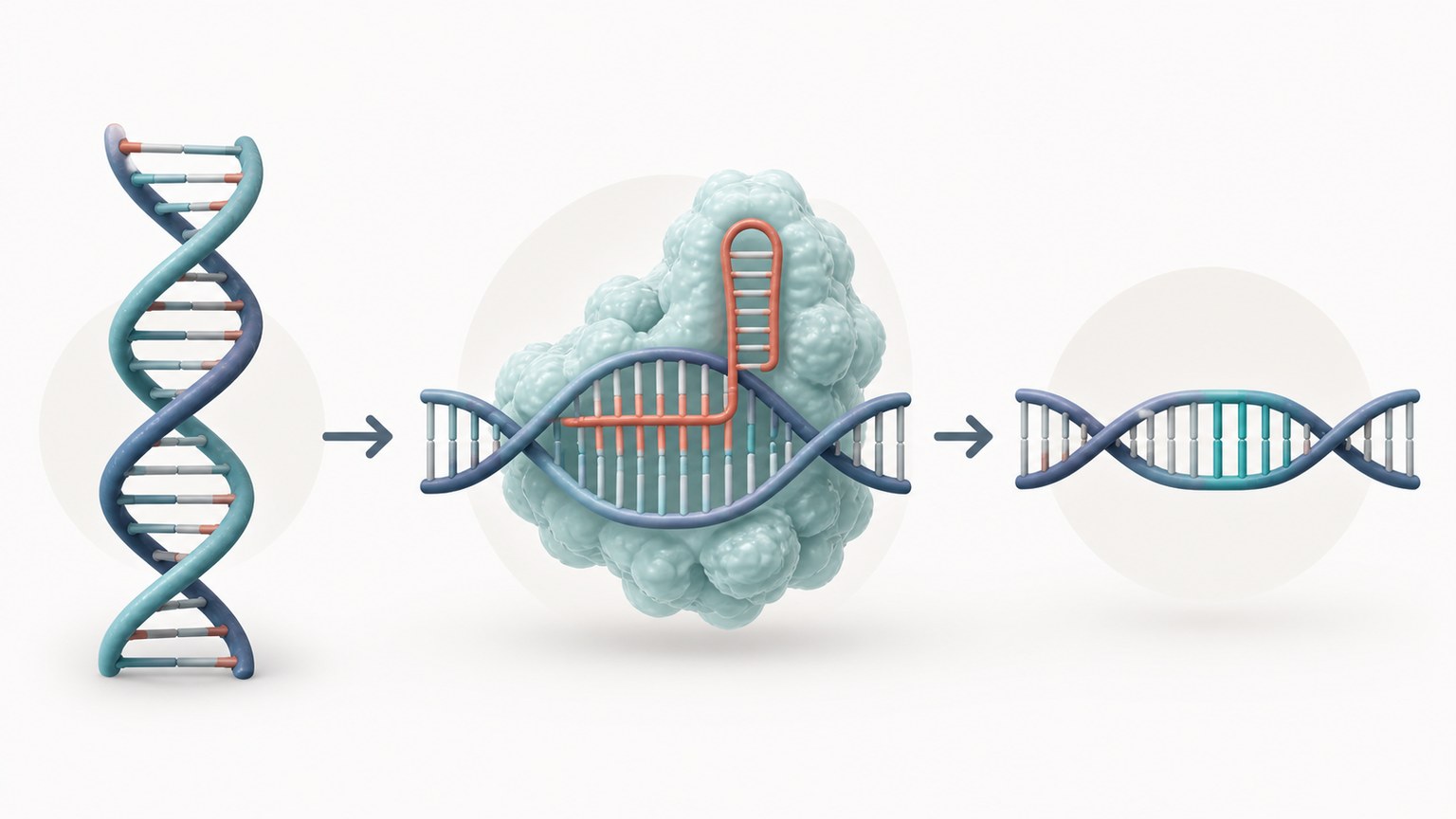
What this mechanism diagram shows
A CRISPR-Cas9 mechanism figure should connect guide design and ribonucleoprotein assembly to PAM-dependent target recognition, DNA unwinding and guide pairing, nuclease-domain cleavage, and repair by non-homologous end joining or homology-directed repair. The final edit depends on repair context, delivery, and experimental design.
- 1A designed guide RNA assembles with Cas9.
- 2The complex scans DNA and recognizes a compatible PAM.
- 3Guide RNA pairs with the target sequence and forms an R-loop.
- 4Cas9 cleaves the target DNA strands near the PAM.
- 5Cellular NHEJ or HDR repairs the break and creates the editing outcome.
Core components of a CRISPR-Cas9 diagram
Show Cas9 bound to a guide RNA, the target DNA, the PAM, and complementary guide–target pairing. Keep guide design and delivery visually separate from the molecular recognition and cleavage steps.
Label the HNH and RuvC cleavage roles only when enzyme detail is useful. For an overview, a clear double-strand break at the intended target is sufficient.
NHEJ and HDR editing outcomes
After cleavage, non-homologous end joining often produces small insertions or deletions that can disrupt a coding sequence. Homology-directed repair can install a planned sequence when a suitable donor and cellular repair context are available.
Show these as alternative outcomes rather than a guaranteed choice. Add off-target analysis, delivery method, or validation assays in a separate workflow lane.
Generate a custom gene-editing figure
Use the prompt below, specify organism, target locus, delivery format, repair strategy, and expected validation. Verify sequence-oriented details independently before publication or experimental use.
Scientific sources and content method
Sources checkedThis mechanism text was prepared with an AI-assisted editorial workflow and checked against the peer-reviewed sources below. It is for research communication and education, not medical advice; verify it against your study context before publication.
Last source check:
- A Programmable Dual-RNA-Guided DNA Endonuclease in Adaptive Bacterial Immunity
Science (2012) · DOI: 10.1126/science.1225829
- The new frontier of genome engineering with CRISPR-Cas9
Science (2014) · DOI: 10.1126/science.1258096
Reusable prompt
Paste this into MechFig, then replace the ingredient, pathway, or target tissue with your own research context.
Safe scientific educational infographic, DNA helix and molecular icons only, clean vector workflow, no people, no anatomy, white background, concise labels.. Scientific content: sgRNA locates a target DNA sequence → Cas9 cuts → cellular repair creates a knockout or precise edit → sequencing validates the result.
Embed this mechanism diagram
Copy the HTML below to include descriptive image text and attribution back to this example page. Confirm that your use complies with applicable rights and site terms before publication or commercial use.
FAQ
What should a CRISPR-Cas9 diagram include?
Include Cas9, guide RNA, target DNA, PAM, guide–target pairing, cleavage, and alternative NHEJ or HDR repair outcomes.
What is the PAM in CRISPR-Cas9 editing?
The protospacer-adjacent motif is a short DNA sequence required for target recognition by a given Cas enzyme. Its sequence depends on the Cas variant.
Does Cas9 determine whether repair uses NHEJ or HDR?
No. Cas9 creates the break; repair pathway usage depends on cell state, donor availability, experimental design, and other biological factors.