HPA Axis Diagram
Explore an HPA axis diagram showing stress, hypothalamic CRH, pituitary ACTH, adrenal cortisol, target tissues, and cortisol negative feedback.
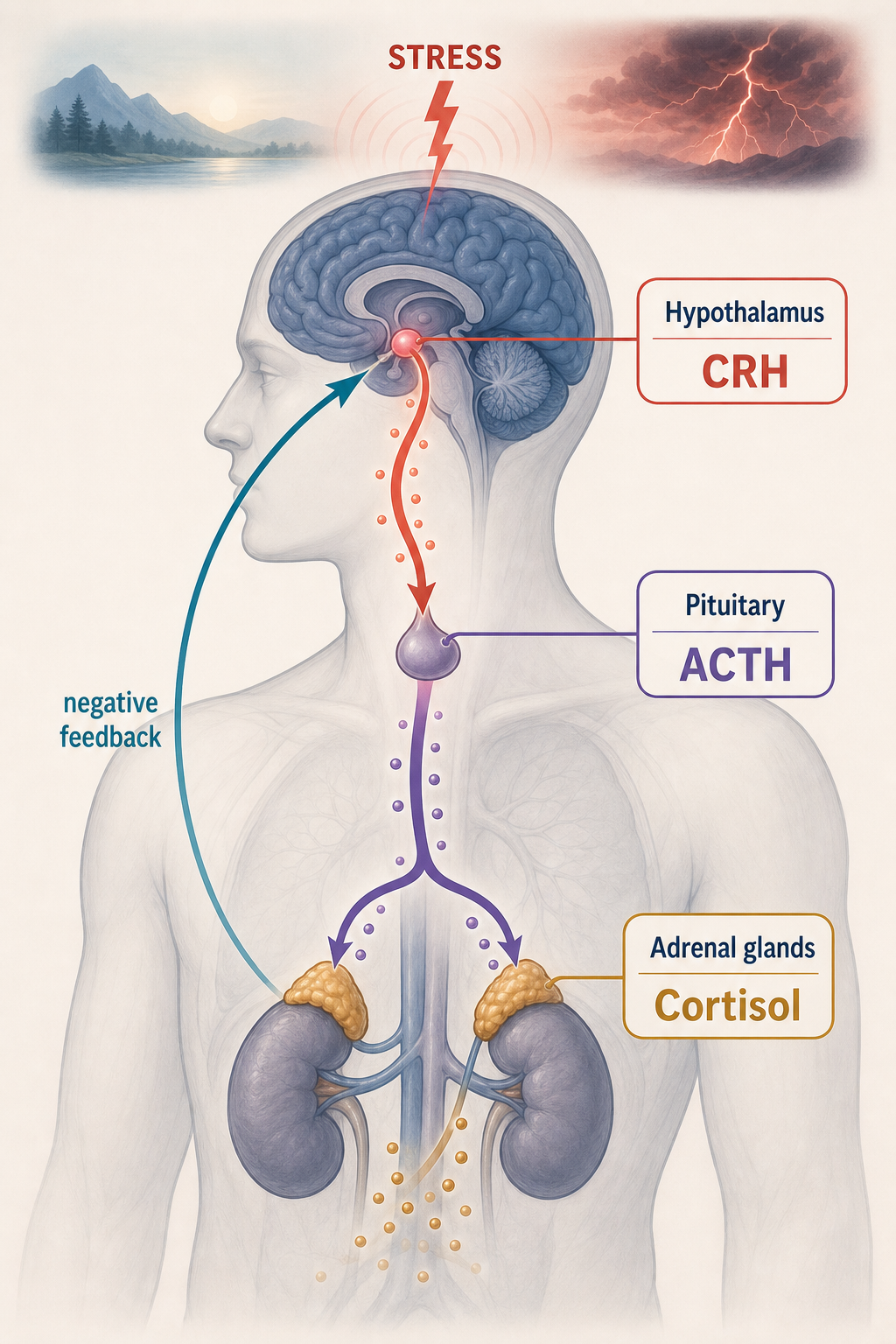
What this mechanism diagram shows
This HPA axis diagram follows the endocrine stress response from a perceived stressor to hypothalamic CRH release, pituitary ACTH secretion, adrenal cortisol production, and negative feedback to the hypothalamus and pituitary. The layout separates organs, hormones, and feedback arrows so the full hypothalamic–pituitary–adrenal axis can be read at a glance.
- 1A physical or psychological stressor activates hypothalamic stress circuits.
- 2The hypothalamus releases corticotropin-releasing hormone (CRH).
- 3CRH stimulates the anterior pituitary to secrete adrenocorticotropic hormone (ACTH).
- 4ACTH stimulates the adrenal cortex to produce and release cortisol.
- 5Cortisol acts on target tissues and inhibits hypothalamic and pituitary signaling through negative feedback.
What a clear HPA axis diagram should show
The core HPA axis is a vertical sequence: stress input, hypothalamus, anterior pituitary, adrenal cortex, cortisol, and target tissues. Hormones belong on the connecting arrows—CRH between hypothalamus and pituitary, then ACTH between pituitary and adrenal cortex.
Negative feedback is essential. Draw cortisol feedback toward both the hypothalamus and pituitary with inhibitory connectors. If the figure addresses circadian rhythm, chronic stress, or glucocorticoid treatment, keep those modifiers visually secondary to the main endocrine axis.
Common HPA axis variants for research figures
A teaching diagram may stop at cortisol and feedback. A research figure can add the paraventricular nucleus, adrenal zona fasciculata, glucocorticoid receptor signaling, inflammatory crosstalk, or a time-course distinction between acute and chronic stress.
Choose one outcome layer rather than attaching many unrelated diseases. Sleep disruption, immune modulation, metabolic effects, or mood-related circuitry each needs different downstream labels and should be supported by the source material used for the figure.
Generate an HPA axis figure from text
Start with the prompt below and specify the intended audience, preferred layout, and whether you need a basic educational axis or a publication-style mechanism with receptors and feedback. A vertical anatomical cascade is usually the most recognizable format.
Before publication, verify endocrine terminology, tissue labels, feedback direction, and any claims about chronic cortisol exposure. AI generation can accelerate composition but does not replace scientific review.
Scientific sources and content method
Sources checkedThis mechanism text was prepared with an AI-assisted editorial workflow and checked against the peer-reviewed sources below. It is for research communication and education, not medical advice; verify it against your study context before publication.
Last source check:
- Regulation of the Hypothalamic-Pituitary-Adrenocortical Stress Response
Comprehensive Physiology (2016) · DOI: 10.1002/cphy.c150015
Reusable prompt
Paste this into MechFig, then replace the ingredient, pathway, or target tissue with your own research context.
HPA axis vertical cascade diagram, organs and hormones labeled, academic style. Scientific content: Stress → hypothalamic CRH → pituitary ACTH → adrenal cortisol → negative feedback to hypothalamus/pituitary.
Embed this mechanism diagram
Copy the HTML below to include descriptive image text and attribution back to this example page. Confirm that your use complies with applicable rights and site terms before publication or commercial use.
FAQ
What are the main components of an HPA axis diagram?
The minimum set is stressor, hypothalamus, CRH, anterior pituitary, ACTH, adrenal cortex, cortisol, target tissues, and cortisol negative feedback.
How should negative feedback be drawn?
Use inhibitory connectors from cortisol back to both the hypothalamus and anterior pituitary. Keep them visually distinct from the forward CRH and ACTH arrows.
Can I generate an HPA axis diagram for a presentation?
Yes. Use the reusable prompt, choose a vertical layout, and simplify labels for slide size. Verify every hormone and arrow before presenting.