Probiotic Gut Mechanism Diagram
Create a probiotic gut mechanism diagram for functional food and nutraceutical storytelling: colonization cues, barrier support, immune modulation, and metabolite endpoints—built for papers, dossiers, and PPT.
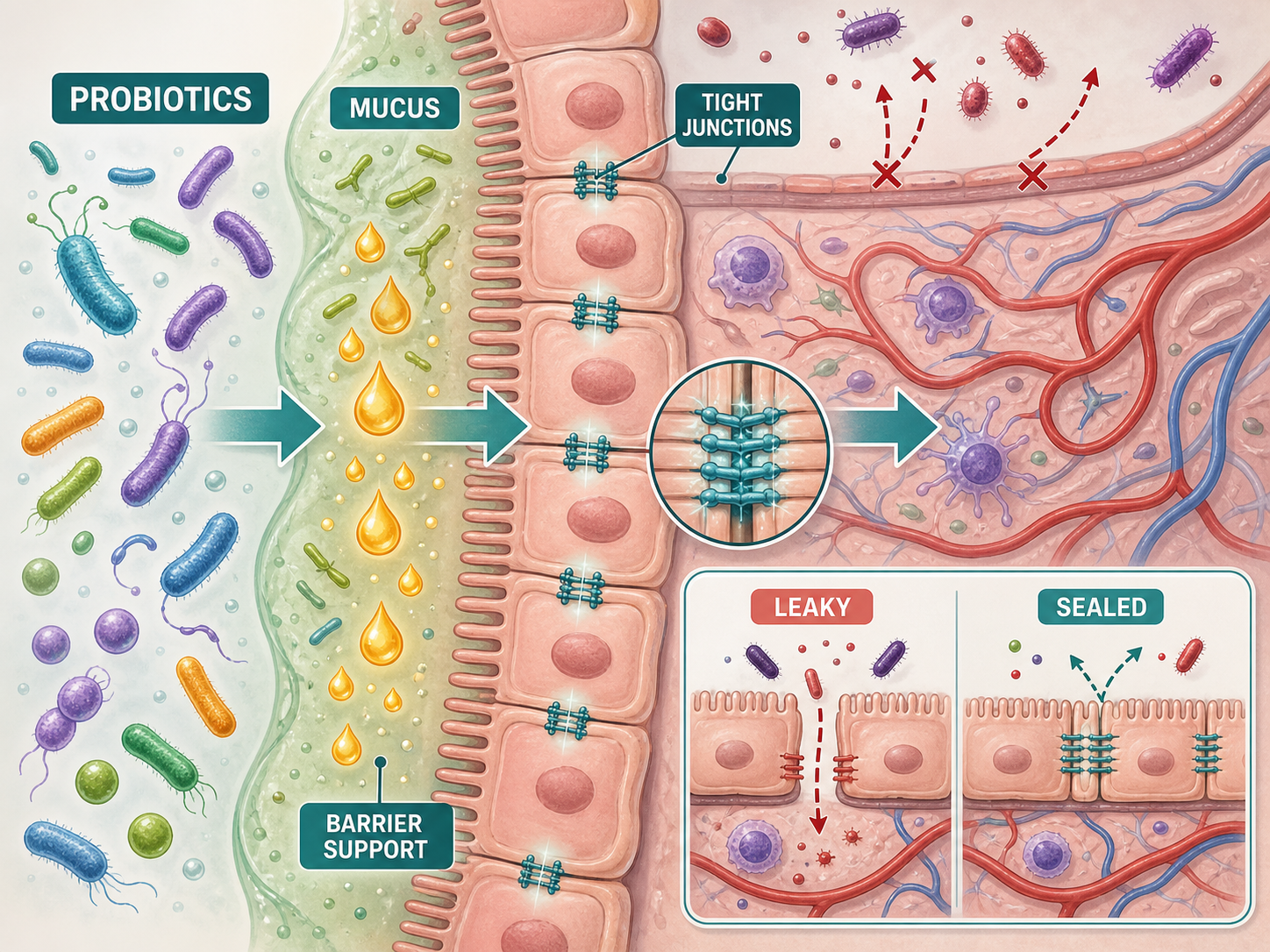
What this mechanism diagram shows
A credible probiotic mechanism figure links the strain or category to gut ecological effects (competition, adhesion), epithelial barrier support, immune tone (e.g., dendritic/T-cell cues), and metabolite outputs (SCFAs)—then lands on a consumer- or clinician-readable benefit without overclaiming disease treatment.
- 1Probiotic intake and transit to the intestinal niche.
- 2Local ecological effects: adhesion, competition, or community modulation.
- 3Host interface: mucus layer and epithelial barrier support.
- 4Immune and metabolite signaling (e.g., SCFA-related cues).
- 5Endpoint framed as gut comfort, barrier support, or balanced immune tone per evidence level.
Search intent for probiotic mechanism figures
Teams searching probiotic gut mechanism diagram or functional food mechanism diagram need a science-looking schematic for product pages, investor decks, and education—not stock photos of yogurt.
Winning pages show a step chain from intake → gut niche → host response → measurable-ish endpoint (barrier integrity, SCFA, immune balance), with room to plug in a named strain later.
Nodes that usually belong on the figure
Intake / survival through GI tract (optional), adhesion or luminal activity, microbiome interaction, mucus/epithelial barrier, pattern-recognition or cytokine cues, and metabolites such as SCFAs. End with a carefully worded host outcome.
Avoid packing every immunological pathway into one slide. Prefer one primary axis (barrier or immune or metabolite) and mark secondary paths as dashed or smaller.
Generate with MechFig
Paste the prompt below, insert your strain name and primary claim axis, and generate a horizontal pathway or graphical abstract. Keep regulatory language conservative in the final caption even if the figure is educational.
Related pages: gut–liver axis for systemic stories; barrier repair for skin–gut crossovers when scientifically justified.
Reusable prompt
Paste this into MechFig, then replace the ingredient, pathway, or target tissue with your own research context.
Gut epithelium barrier with microbes and SCFA arrows, educational schematic. Scientific content: Commensals → SCFA → tight junction proteins → barrier ↑ → less LPS → lower inflammation.
Embed this mechanism diagram
Copy the HTML below to include descriptive image text and attribution back to this example page. Confirm that your use complies with applicable rights and site terms before publication or commercial use.
FAQ
What should a probiotic gut mechanism diagram include?
Show intake → gut activity → host interface (barrier/immune/metabolites) → a clear endpoint. Label the strain or category and keep claim language matched to your evidence.
Is this suitable for functional food dossiers?
Yes as an education or communication figure. Always align final wording with regional advertising and supplement rules; the diagram is a structure, not a clinical proof.
Can AI generate probiotic mechanism figures in MechFig?
Yes. Use this page’s prompt, specify strain and primary pathway axis, and generate a pathway-style figure for slides or a graphical abstract layout for documents.