RTK activation basics Mechanism Diagram
Create a clear rtk activation basics mechanism diagram for papers, PPT slides, research summaries, and signaling pathways education. Start from a reusable prompt and adapt it to your own pathway.
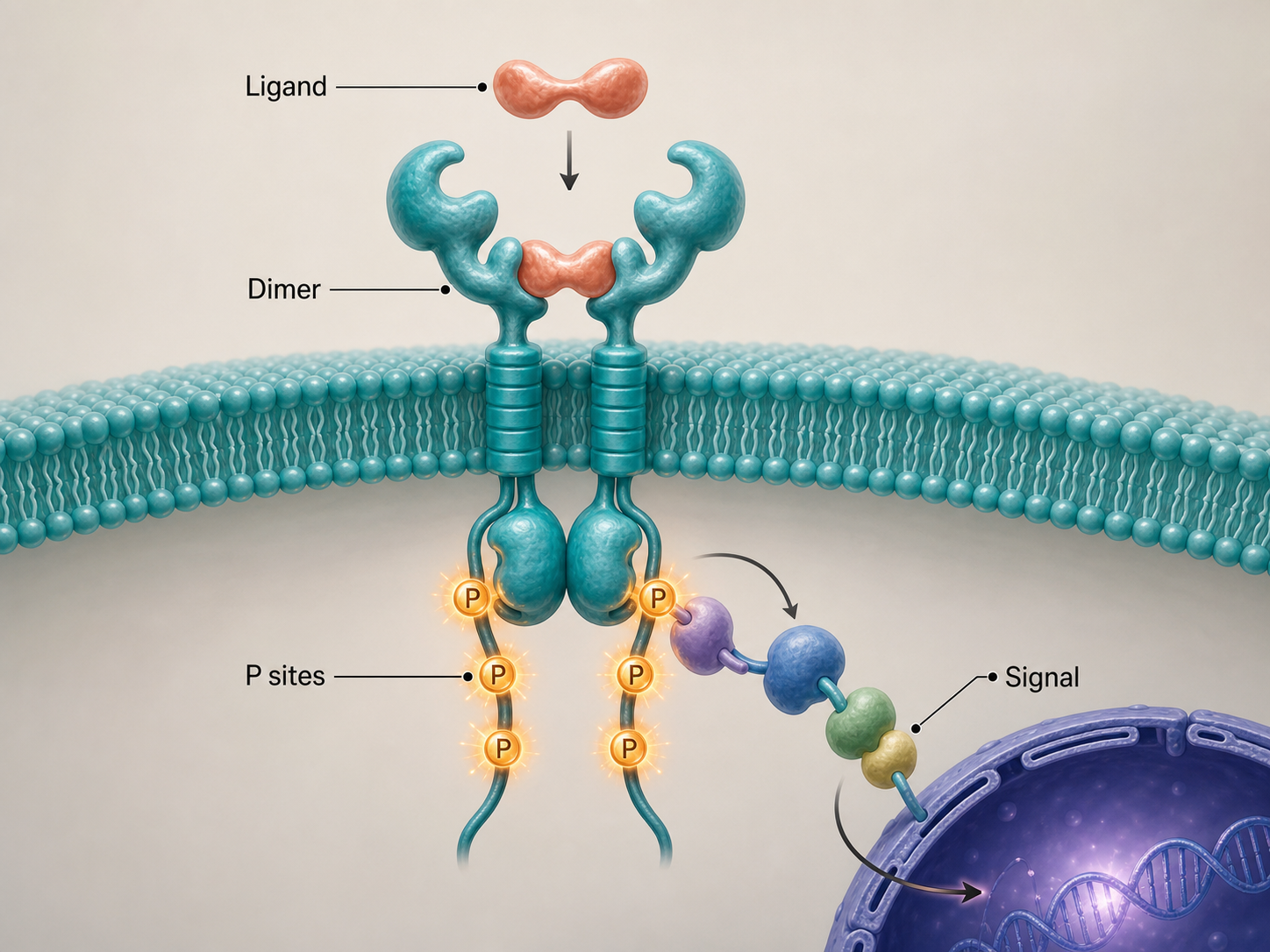
这张机制图展示了什么
This rtk activation basics mechanism diagram turns the homepage example into a searchable, reusable scientific figure page. It is designed to help readers understand the mechanism structure before generating their own version in MechFig.
- 1Ligand binding
- 2receptor dimerization
- 3cross-phosphorylation of kinase domains
- 4docking sites recruit PLCγ, PI3K, adapters
- 5parallel downstream pathways
可复用提示词
将提示词放入 MechFig,再把成分、通路或目标组织替换为你的研究内容。
Plasma membrane RTK dimer schematic, extracellular ligand, intracellular phospho-tyrosine dots, textbook figure, high legibility. Scientific content: Ligand binding → receptor dimerization → cross-phosphorylation of kinase domains → docking sites recruit PLCγ, PI3K, adapters → parallel downstream pathways.
常见问题
What should a rtk activation basics mechanism diagram include?
It should include the starting trigger or input, the major pathway nodes, directional arrows between steps, and a concise endpoint that explains the biological meaning.
Can I use this as a starting point for my own figure?
Yes. Use the prompt as a structure, then replace the pathway, ingredient, disease context, or endpoint with your own research content.