Hyaluronic Acid Hydration Mechanism Diagram
Explore a hyaluronic acid hydration mechanism diagram showing water binding, stratum corneum hydration, film formation, and reduced moisture loss.
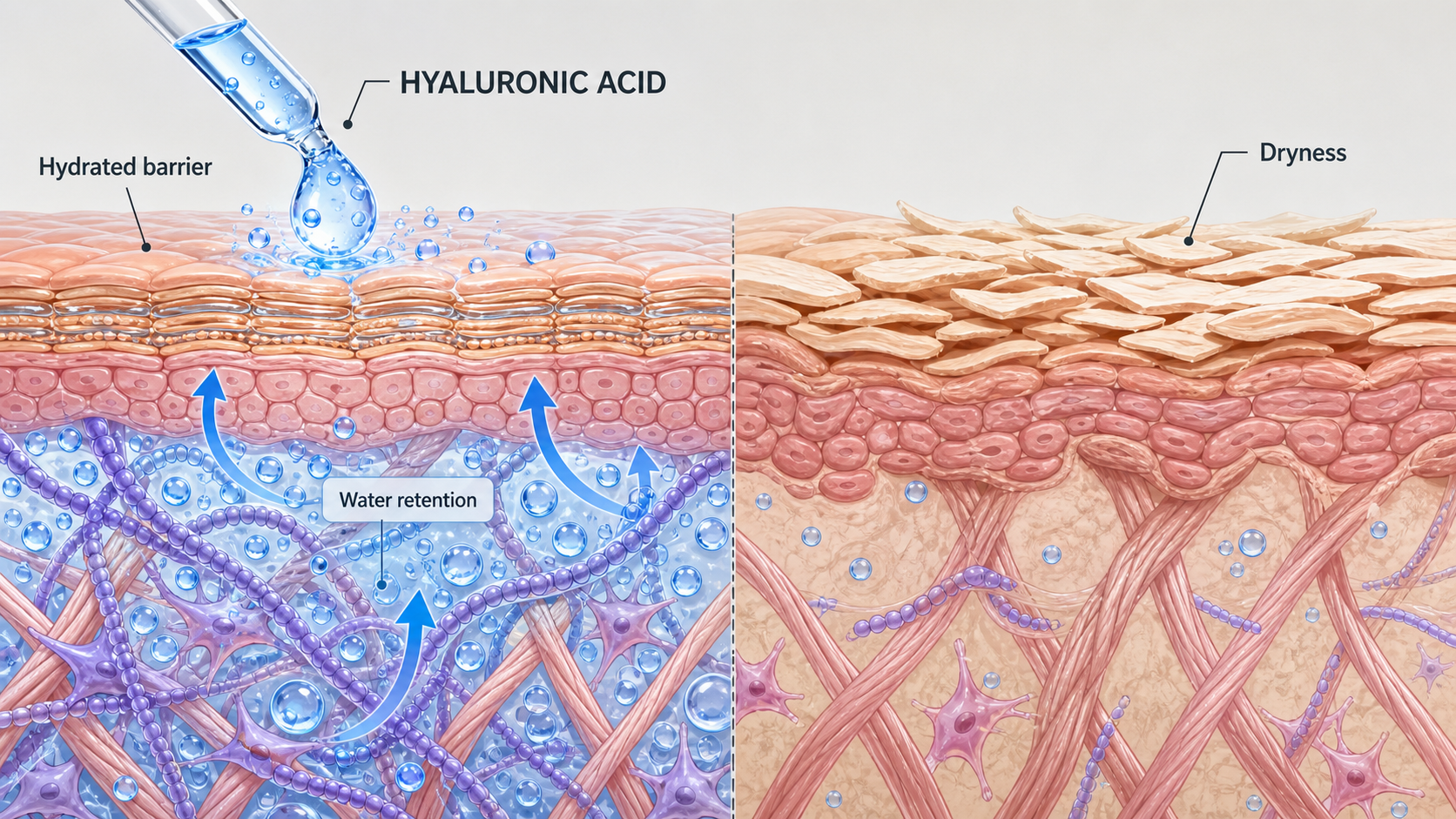
What this mechanism diagram shows
Hyaluronic acid is a highly hydrophilic glycosaminoglycan. In a topical hydration figure, it should be shown binding water within the formulation and at the skin surface, supporting a hydrated film and improving stratum corneum water content. Molecular weight, formulation, humidity, and delivery system affect where and how the material acts, so the diagram should avoid implying that every HA grade penetrates deeply into skin.
- 1HA encounters water in the formulation and at the skin surface.
- 2Hydrophilic polymer chains bind and retain water molecules.
- 3A hydrated film forms over the stratum corneum and supports surface moisture.
- 4Formulation variables and HA molecular characteristics modify the hydration profile.
- 5The endpoint is improved outer-layer hydration and the appearance of smoother, less dry skin.
How hyaluronic acid supports skin hydration
A useful figure separates immediate humectant and film-forming effects from longer-term biological claims. HA attracts and retains water, helps create a flexible surface film, and can improve the appearance associated with dryness by increasing hydration in the outer skin layers.
Show the stratum corneum and ambient or formulation water as distinct compartments. This makes the water-binding mechanism clearer than a generic droplet graphic and leaves room to label transepidermal water loss without claiming that HA itself permanently seals the barrier.
Molecular weight and formulation context
High-, medium-, and low-molecular-weight HA can differ in film behavior, diffusion, and biological context. Use only the grade distinctions supported by the formulation or source study, and distinguish sodium hyaluronate, hydrolyzed HA, and crosslinked HA when they matter.
Humidity, occlusives, emollients, and the rest of the vehicle influence the final hydration outcome. A scientifically careful diagram presents these as formulation variables rather than promising identical effects from every HA product.
Build a custom hydration mechanism figure
Start from the reusable prompt, name the HA form and skin layer, and choose whether the endpoint is water retention, stratum corneum hydration, surface smoothness, or a measured instrumental outcome. Verify claims against the evidence for the exact ingredient and formula.
Scientific sources and content method
Sources checkedThis mechanism text was prepared with an AI-assisted editorial workflow and checked against the peer-reviewed sources below. It is for research communication and education, not medical advice; verify it against your study context before publication.
Last source check:
- Applications and delivery mechanisms of hyaluronic acid used for topical/transdermal delivery — A review
International Journal of Pharmaceutics (2020) · DOI: 10.1016/j.ijpharm.2020.119127
Reusable prompt
Paste this into MechFig, then replace the ingredient, pathway, or target tissue with your own research context.
Skin cross-section hydration diagram, HA molecules and water icons, skincare science style. Scientific content: HA binds water → ECM hydration → SC water ↑ → barrier flexibility; MW determines penetration depth.
Embed this mechanism diagram
Copy the HTML below to include descriptive image text and attribution back to this example page. Confirm that your use complies with applicable rights and site terms before publication or commercial use.
FAQ
How does hyaluronic acid hydrate the skin?
HA binds water and supports a hydrated film at the skin surface, which can increase water content in the stratum corneum. The result depends on molecular form, concentration, vehicle, and environmental conditions.
Does every hyaluronic acid penetrate deeply into skin?
No. Penetration depends strongly on molecular size and delivery system. A mechanism diagram should not show deep dermal delivery unless the specific material and study support it.
What belongs in an HA hydration diagram?
Include water molecules, the HA polymer, stratum corneum, hydrated surface film, relevant formulation variables, and a clearly qualified hydration endpoint.